

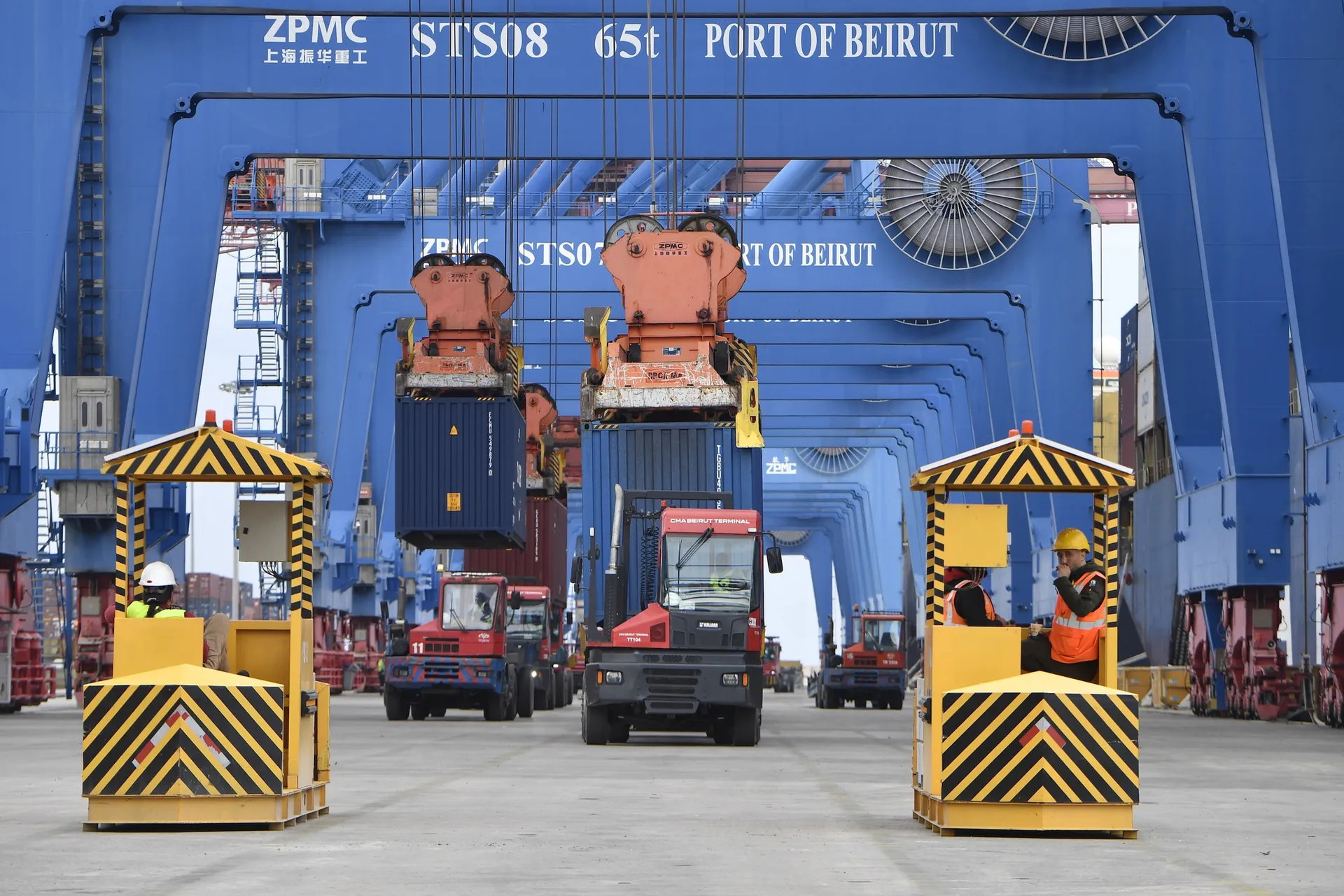
Saudi Arabia ’s decision to lift its five-year ban on Lebanese imports could reopen one of Lebanon’s key export markets in the Gulf, but economists say the bigger question is whether it signals a broader return of Saudi tourism and investment at a time when Lebanon’s economy remains deeply fragile.
The ban was first imposed on Lebanese fruits and vegetables in 2021 after Saudi authorities seized more than five million Captagon pills hidden in a shipment of pomegranates from Lebanon. The restrictions were later expanded to cover all Lebanese imports.
For Lebanese producers, the decision carries practical implications. Before the ban, Saudi Arabia was a significant market for Lebanese goods, with its importance extending beyond direct exports to broader access to Gulf trade networks.
Prior to the ban, Lebanese exports to Saudi Arabia totalled approximately $240 million in 2020, according to Asharq Al-Awsat. However, Khaled Abu Shakra, a researcher at the Lebanese Institute for Market Studies, says the figure should be interpreted cautiously.
“2020 is not the best benchmark because it was the first year of Lebanon’s economic collapse. At the time, the Lebanese currency was rapidly depreciating, and productive sectors had not yet adjusted to the new cost structures and economic realities,” Abu Shakra explains.
A major loss for Lebanese exporters was access to broader Arab markets. “Overland exports were cheaper and faster for Lebanese exporters,” Abu Shakra says.
“Their importance became even more evident recently due to disruptions in maritime transport, supply chain interruptions, longer delivery times and rising costs. For example, shipping a single container from the Port of Beirut to Jebel Ali Port now costs around $7,000 because of war-related conditions, delays and a 4,000% increase in insurance costs,” he adds.
However, analysts caution that the immediate economic impact of lifting the ban may be limited. Lebanon’s economy has changed significantly since 2021, with many exporters shrinking their operations, shifting to alternative markets or exiting the sector altogether amid currency devaluation, import restrictions and the banking crisis.
“The immediate economic impact is relatively small. That’s why I keep saying that its political significance is greater than its direct economic impact,” says Dr Layal Mansour, an economics professor based in Kuwait, who has studied Saudi Arabia ’s contribution to the Lebanese economy.
But if the decision leads to broader economic cooperation, including renewed investment and tourism, the long-term impact could be far more significant, she says.
Agriculture, one of the sectors most directly affected by the ban, contributes around 2-4% of Lebanon’s GDP, according to Mansour.
While the direct impact of exports may be limited, analysts say a broader Saudi economic return – including tourism, investment and financial inflows – could support Lebanon’s monetary stability.
But Saudi Arabia ’s importance to Lebanon extends beyond trade. The kingdom has historically been a major source of tourism, investment and financial inflows that support sectors including hospitality, retail and services.
The current Lebanese government came to power last year with promises of reform and has since worked to rebuild ties with Gulf countries and attract regional visitors in hopes of reviving the economy. The Saudi decision also comes amid a wider geopolitical shift, with some Gulf countries, including the UAE, also lifting travel restrictions that once prevented their citizens from visiting Lebanon.
“There seems to be a concerted international effort to support this Lebanese government based on the perception that the government is willing to challenge Hezbollah inside Lebanon. And Saudi Arabia is part of this broader picture. There are related interests in decoupling Hezbollah from Iran’s regional influence at this moment, so the timing may be more than coincidence,” says Robert Mogielnicki, the founder of Polisphere Advisory, an EMEA-focused investment and business intelligence advisory based in Paris, and a non-resident fellow at the Arab Gulf States Institute.
In the longer term, analysts say the greater economic opportunity lies not only in restoring trade, but in bringing back Gulf investment and tourists who were once a major driver of Lebanon’s service economy.
“From an economic perspective, the move could provide a meaningful boost to Lebanese exporters at a time of increasing hardship. For Saudi Arabia, the decision also aligns with a broader strategy of re-engaging with Lebanon’s current leadership and supporting economic stability in the country,” says Joseph Dahrieh, managing director at Tickmill, a UAE-based trading company.
According to Abu Shakra, Lebanon’s recent monetary policies have helped stabilise the exchange rate, but that stability remains vulnerable due to reduced financial inflows caused by the ongoing conflict.
Abu Shakra says renewed Saudi engagement could help restore financial inflows and support Lebanon’s recent exchange-rate stability.
However, economists warn that reopening trade is only the first step. The long-term benefits will depend on ending the conflict, implementing banking reforms, and improving governance and transparency.
“Only then can we once again see Saudi investments in Lebanon, renewed Saudi financial support, and the return of our dear Saudi visitors to Lebanon after a long absence caused by domestic conditions, conflict, and various other challenges,” Abu Shakra adds.